



Centurion Long Span Shelving 1-Bay 2m Wide - 200kg Per Shelf, 800kg Bay, Gusseted Steel Construction
Centurion Long Span Shelving 1-Bay 2m Wide - 200kg Per Shelf, 800kg Bay, Gusseted Steel Construction
In Stock - Ships in 24-48 hours.

Couldn't load pickup availability


Two metres wide. Two hundred kilograms per shelf. One bay that could anchor a serious workshop for the next twenty years.
Most garage shelving is built for boxes and bins. This Centurion long span system is built for the kind of loads that live in a working workshop - automotive parts, building materials, sheet goods, heavy equipment, and the accumulated weight of a professional trade or serious hobby operation. At 2.0 metres wide and 60cm deep, a single bay covers the footprint of three standard garage shelving units while carrying four times the per-shelf capacity. It's a different category of storage.
A note on the all-in price.
This is a 67kg, 2-metre carton. Several competitors list this product in the $300–$350 range and add $200–$250 freight at checkout - making the true landed cost $500–$600 before you've lifted a single piece. SmartStorage.au prices this transparently with free shipping included on orders over $50. There are no checkout surprises. What you see is what you pay.
Why 200kg per shelf is real - the engineering that makes it possible.
In a market where some sellers claim 500kg per shelf on units that are genuinely rated for 60kg, the Centurion LS-200 earns its capacity rating through specific structural engineering decisions:
Gusseted Joints - Not Tack-Welds
The vertical triangulation beams use gusseted joints - a reinforced bracket weld that distributes load across a larger weld area. Tack-welded construction (the cheaper alternative) creates point stress at each weld site, which can fracture under cyclical or heavy loading. Gusseted joints are the structural standard for commercial and industrial racking.
L-Section Cross Beams
The horizontal beams are L-shaped in cross-section. An L-profile resists bending across both axes - vertical load deflection and lateral racking. Flat beam profiles of the same steel weight resist load in one axis only. The L-section is why these beams carry 200kg per shelf without visible flex under load.
Double-Edge Uprights
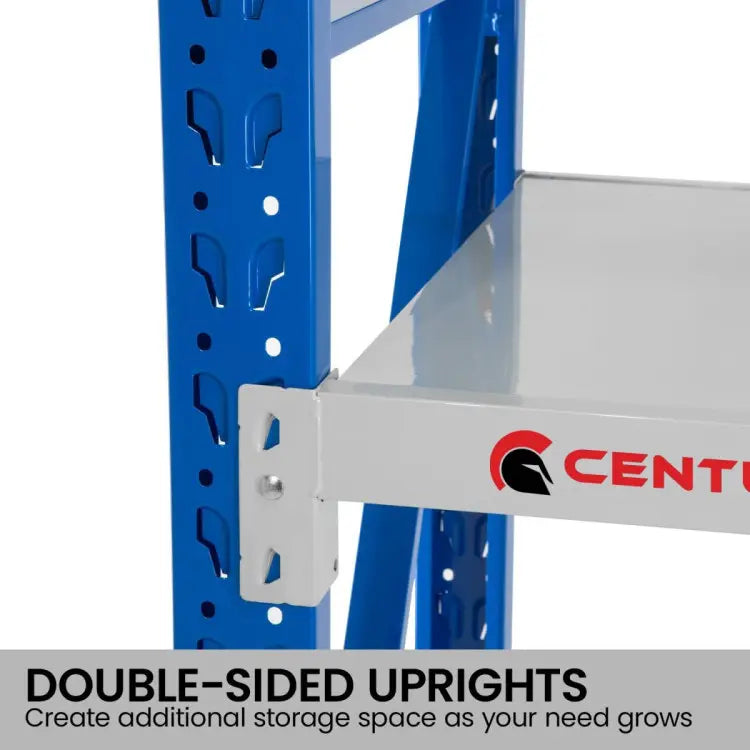
All uprights have two slotted edges - both the left and right side of each upright are slotted for beam connection. This means any bay can be extended on either side with an add-on bay later, without replacing the original uprights. One starter bay becomes the foundation of a complete workshop shelving system.
Floor-Bolt Ready Legs
The legs are designed to be bolted to a concrete slab - a professional installation option that's required when loading approaching the rated capacity. Bolting the uprights eliminates racking movement under asymmetric loads and is the installation method used in commercial warehouses. Hardware and template included.
- 🏗️ 2.0m wide × 0.6m deep × 2.0m tall - 1 bay configuration - equivalent floor coverage to 3 standard home shelving units in a single professional bay
- ⚖️ 200kg per shelf (4 shelves - 2 per level) - genuine engineered rating; 800kg total bay capacity
- 🔩 8 steel shelves included - powder-coated steel shelf panels; each level uses 2 panels spanning the 2m width
- 📐 10-point welded joints - multiple weld contact points per joint for structural redundancy
- 🔐 Safety pins at all beam connections - prevents beam displacement under vibration or impact; mandatory safety feature in commercial installations
- 🔄 Expandable to multi-bay systems - double-edge uprights allow add-on bays on either side; no new uprights needed for expansion
- 🛡️ Full powder-coat finish - all steel components powder-coated for corrosion resistance in typical workshop environments
- ⚓ Floor-bolt capability - legs designed for concrete anchoring when high capacity loading requires it
What 200kg per shelf actually holds.
For context: a full engine block is typically 120–180kg. A loaded 44-gallon drum of oil is around 180kg. Twelve standard house bricks weigh about 60kg. Typical automotive toolbox sets run 40–80kg. At 200kg per shelf across four shelves, this system handles the kind of storage that defeats every standard garage shelving unit sold in Australia at any price point. If you're storing automotive components, trade materials, bulk hardware, heavy equipment or anything that's ever broken a standard shelf, this is the shelf category you've needed.
Building a system over time.
The Centurion long span system is designed to grow. Start with this 1-bay 2m wide starter unit. Add an expansion bay on either side later using the existing double-edge uprights as shared posts - no reinstallation, no new uprights, just add beams and shelves. A two-bay system gives you 4 metres of 200kg-per-shelf shelving. A four-bay run covers 8 metres. The system is used in commercial warehouses, workshops and trade premises across Australia and is engineered to the same structural standards as commercial racking.
Two metres wide. Two hundred kilograms per shelf. One bay that could anchor a serious workshop for the next twenty years.
Most garage shelving is built for boxes and bins. This Centurion long span system is built for the kind of loads that live in a working workshop - automotive parts, building materials, sheet goods, heavy equipment, and the accumulated weight of a professional trade or serious hobby operation. At 2.0 metres wide and 60cm deep, a single bay covers the footprint of three standard garage shelving units while carrying four times the per-shelf capacity. It's a different category of storage.
A note on the all-in price.
This is a 67kg, 2-metre carton. Several competitors list this product in the $300–$350 range and add $200–$250 freight at checkout - making the true landed cost $500–$600 before you've lifted a single piece. SmartStorage.au prices this transparently with free shipping included on orders over $50. There are no checkout surprises. What you see is what you pay.
Why 200kg per shelf is real - the engineering that makes it possible.
In a market where some sellers claim 500kg per shelf on units that are genuinely rated for 60kg, the Centurion LS-200 earns its capacity rating through specific structural engineering decisions:
Gusseted Joints - Not Tack-Welds
The vertical triangulation beams use gusseted joints - a reinforced bracket weld that distributes load across a larger weld area. Tack-welded construction (the cheaper alternative) creates point stress at each weld site, which can fracture under cyclical or heavy loading. Gusseted joints are the structural standard for commercial and industrial racking.
L-Section Cross Beams
The horizontal beams are L-shaped in cross-section. An L-profile resists bending across both axes - vertical load deflection and lateral racking. Flat beam profiles of the same steel weight resist load in one axis only. The L-section is why these beams carry 200kg per shelf without visible flex under load.
Double-Edge Uprights
All uprights have two slotted edges - both the left and right side of each upright are slotted for beam connection. This means any bay can be extended on either side with an add-on bay later, without replacing the original uprights. One starter bay becomes the foundation of a complete workshop shelving system.
Floor-Bolt Ready Legs
The legs are designed to be bolted to a concrete slab - a professional installation option that's required when loading approaching the rated capacity. Bolting the uprights eliminates racking movement under asymmetric loads and is the installation method used in commercial warehouses. Hardware and template included.
- 🏗️ 2.0m wide × 0.6m deep × 2.0m tall - 1 bay configuration - equivalent floor coverage to 3 standard home shelving units in a single professional bay
- ⚖️ 200kg per shelf (4 shelves - 2 per level) - genuine engineered rating; 800kg total bay capacity
- 🔩 8 steel shelves included - powder-coated steel shelf panels; each level uses 2 panels spanning the 2m width
- 📐 10-point welded joints - multiple weld contact points per joint for structural redundancy
- 🔐 Safety pins at all beam connections - prevents beam displacement under vibration or impact; mandatory safety feature in commercial installations
- 🔄 Expandable to multi-bay systems - double-edge uprights allow add-on bays on either side; no new uprights needed for expansion
- 🛡️ Full powder-coat finish - all steel components powder-coated for corrosion resistance in typical workshop environments
- ⚓ Floor-bolt capability - legs designed for concrete anchoring when high capacity loading requires it
What 200kg per shelf actually holds.
For context: a full engine block is typically 120–180kg. A loaded 44-gallon drum of oil is around 180kg. Twelve standard house bricks weigh about 60kg. Typical automotive toolbox sets run 40–80kg. At 200kg per shelf across four shelves, this system handles the kind of storage that defeats every standard garage shelving unit sold in Australia at any price point. If you're storing automotive components, trade materials, bulk hardware, heavy equipment or anything that's ever broken a standard shelf, this is the shelf category you've needed.
Building a system over time.
The Centurion long span system is designed to grow. Start with this 1-bay 2m wide starter unit. Add an expansion bay on either side later using the existing double-edge uprights as shared posts - no reinstallation, no new uprights, just add beams and shelves. A two-bay system gives you 4 metres of 200kg-per-shelf shelving. A four-bay run covers 8 metres. The system is used in commercial warehouses, workshops and trade premises across Australia and is engineered to the same structural standards as commercial racking.

